Regulatory Change Monitoring
Regulatory updates do not slow down. Your monitoring process should keep pace.
Ruleward tracks, classifies, and delivers structured regulatory change alerts to compliance teams at mid-size banks, insurers, and specialty finance firms.
Federal regulators issued over 2,400 guidance documents, rules, and interpretive letters in 2024. Most compliance teams learned about material changes two to six weeks after publication.
Based on Federal Register and agency publication volumes, fiscal year 2024Manual monitoring misses interim guidance
Interpretive letters and supervisory bulletins that don't make headline news accumulate undetected until an examination surfaces a gap.
Undifferentiated digests bury obligations
Generic industry newsletters mix enforcement actions with final rules with notices of proposed rulemaking — forcing compliance staff to re-read everything.
No business-line classification
Without tagging by affected business line, compliance teams cannot route alerts to the right desk or prioritize remediation work.
How It Works
Detect. Classify. Deliver.
Detect
Continuous source ingestion
Continuous ingestion from the Federal Register, agency websites, regulatory bulletins, and interpretive guidance channels. No publication window missed.
Classify
Structured taxonomy tagging
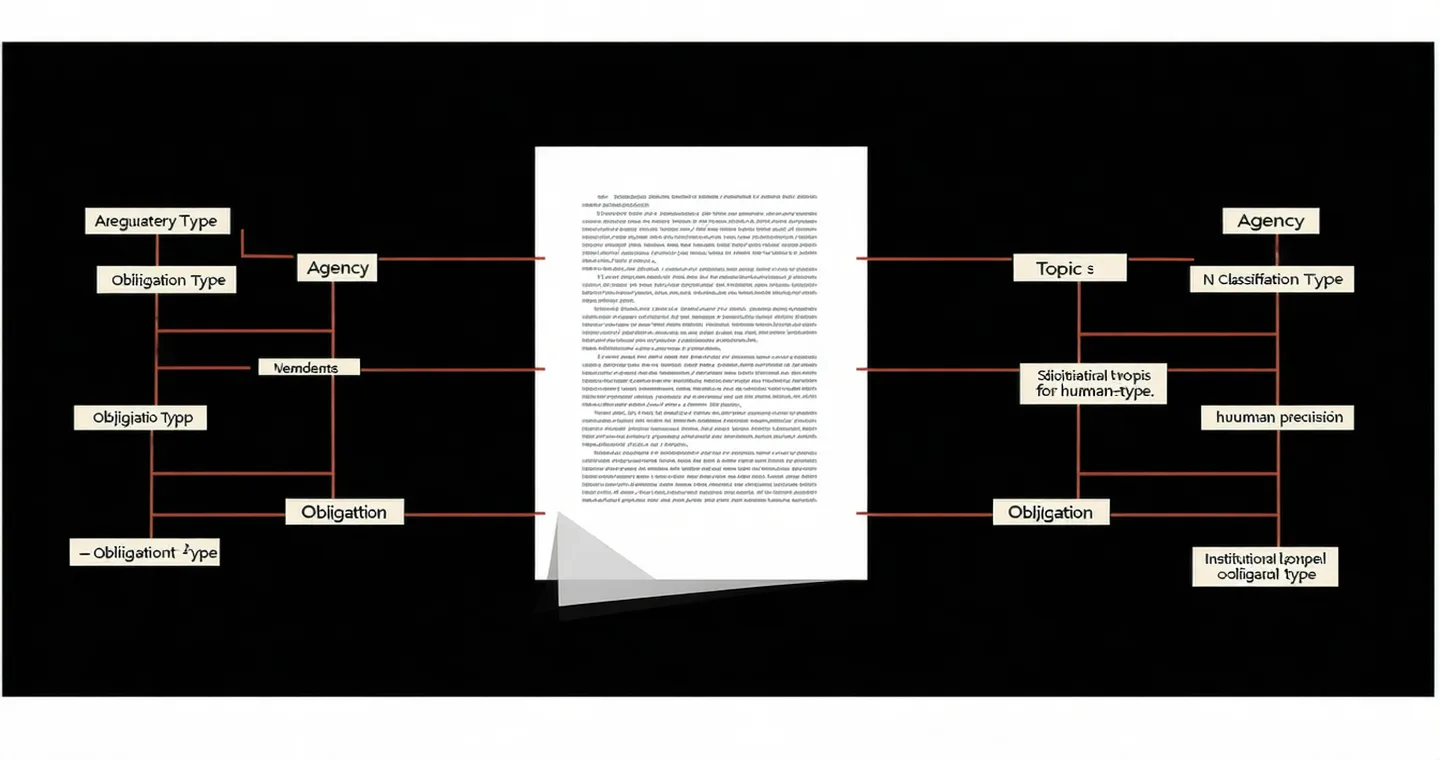
Each document tagged by issuing agency, regulatory topic (AML/BSA, capital, consumer protection, climate), obligation type, and affected business lines.
Deliver
Structured alerts to your workflow
Structured alerts to compliance inbox or GRC system, with impact summary and relevant document section citations in each notification.
Coverage by Industry
Built for financial services regulatory complexity
Commercial Banking
OCC · FDIC · Federal Reserve
Prudential supervision, capital requirements, consumer compliance, and BSA/AML — the full federal banking regulatory stack.
View coverageInsurance
NAIC · NYDFS · State Depts
Multi-state insurance regulatory complexity, including NYDFS cybersecurity rules and state-specific filing requirements.
View coverageAsset Management
SEC · CFTC
Investment adviser and broker-dealer dual jurisdiction, derivatives reporting, and custody rule compliance.
View coverageSpecialty Finance
CFPB · FTC · State AGs
Consumer financial protection rules, UDAAP enforcement trends, and state-level regulatory activity for non-bank lenders.
View coverageWe explain exactly how each regulatory document is classified — because compliance officers need to trust the taxonomy before they trust the alert.
Human Review Layer
AI classification outputs reviewed by regulatory specialists before delivery
Source Selection Criteria
Documented inclusion criteria for each regulatory body and publication channel
Taxonomy Documentation
Full obligation-type and topic classification schema available to customers
What Compliance Officers Say
Built with the CCO's workflow in mind
Before Ruleward, our team was finding out about interim OCC guidance three weeks after publication — sometimes only when examiners asked about it. Now we know same day.
Head of Compliance — Regional Commercial Bank
The obligation-type classification is what we needed. Knowing immediately whether something is a final rule or supervisory guidance changes how we prioritize response. No other tool does this.
Chief Compliance Officer — Specialty Insurance Carrier
Our entire CFPB rulemaking calendar is now driven by the Ruleward feed. We went from reactive to proactive. The compliance team actually trusts the alerts because the taxonomy is explained.
VP Regulatory Affairs — Non-Bank Mortgage Servicer
Regulatory change does not announce itself. Your monitoring should.
Washington, DC — working with compliance teams at mid-size banks, insurers, and specialty finance firms.
Schedule a Briefing